ACT4TECH
Technologial Innovation Hub for the diagnosis of communicable and con-communicable diseases
Budget: € 5,124,450
Certo. Ho mantenuto un registro istituzionale e tecnico-scientifico, coerente con la traduzione precedente e adatto a una proposta progettuale.
In recent years, medical progress has accelerated significantly thanks to the integration of advanced diagnostics and personalised medicine, two fields that currently represent the pillars of a new paradigm – the so-called “4P Medicine”. At the heart of this transformation lies the principle that each individual has a unique profile, determined by genetic, biological and environmental factors, making the adoption of individualised diagnostic and therapeutic approaches essential. In this context, there is an increasing need to develop and implement high-resolution diagnostic methodologies capable of operating at the molecular and cellular levels, supported by continuously evolving emerging technologies such as genomics, proteomics, metabolomics and artificial intelligence applied to bioinformatics. Attention is progressively shifting towards early diagnosis and the definition of personalised therapeutic strategies, particularly in relation to diseases characterised by high biological complexity, which often present distinctive molecular markers and require a tailored clinical approach based on molecular evidence and omics data.
In Italy, and particularly in the Less Developed Regions of Southern Italy, there is a high level of scientific, technological and infrastructural expertise in the fields of genomics, cell biology and bioinformatics. These areas represent strategic assets for the development of innovative healthcare solutions. However, these resources are often poorly integrated, unevenly distributed across the territory and underutilised due to the lack of coordinated access and common strategies for the development and growth of technological platforms. In light of this, it is a priority to initiate a structured process for integrating and valorising these centres of excellence, with the aim of reducing the fragmentation of the technological and infrastructural assets already available in Southern Italy and contributing to reducing territorial disparities and fostering the sustainable and inclusive development of the national research and innovation system in support of diagnostics.
Through the creation of a technological innovation hub across the Less Developed Regions of Southern Italy, ACT4TECH aims to implement a structured process for integrating and strengthening the technical, scientific and infrastructural capabilities of 13 public and private research institutions, involving 17 Operational Units. This will be achieved through:
- the creation of a network of modern and shared infrastructures, multidisciplinary expertise and interoperable platforms capable of managing, analysing and interpreting large volumes of complex biological data;
- the enhancement of existing infrastructures at the participating Operational Units;
- the creation of a portfolio of high-technology services in the field of molecular and cellular diagnostics;
- the valorisation of the human capital operating within the 17 Operational Units involved in the ACT4TECH project.
The ACT4TECH project is structured into three Work Packages (WPs):
-
WP1 – ACT4TECH-CODIP comprises activities for the coordination and promotion of the Technological Innovation Hub that the INF-ACT Foundation, lead organisation of the ACT4 projects, intends to implement in order to ensure the achievement of the project’s objectives and targets.
-
WP2 – ACT4TECH-OMICS will address the challenge of multi-omics data integration, providing the ACT4TECH Technological Innovation Hub with standardised, interoperable and clinically applicable tools. The objective is to promote the adoption of 4P medicine models. The implementation of the activities proposed under WP2 will enable: (i) the enhancement of physical and digital infrastructures through the upgrading of cutting-edge technologies for genomics, transcriptomics, proteomics and metabolomics, integrated with high-performance management and storage systems (HPC, hybrid cloud and distributed architectures); (ii) the structuring of the ACT4TECH omics and bioinformatics service offering, with the aim of generating economic, social and scientific impact across the territory; and (iii) contributing to an increase in interactions, collaborations and scientific critical mass at both territorial and national levels, for example through the establishment of an interconnected omics network, with particular attention to the consolidation of biobanks and local clinical networks, the promotion of technology transfer to healthcare organisations and biotech SMEs, the development of collaborative projects at national and European level, and the implementation of technical training and professional development initiatives.
-
WP3 – ACT4TECH-CELLTECH aims to establish a coordinated system and strengthen technological platforms for advanced cellular diagnostics applied to communicable and non-communicable diseases, fully aligned with the principles of 4P medicine. WP3 aims to integrate into the Technological Innovation Hub infrastructures capable of supporting the entire innovation pathway, from molecular design to production, from nanoscale characterisation to preclinical model validation and ultimately to testing in real-world clinical settings. The activities aim to address the growing demand, at both national and international levels, for innovative, highly integrated and miniaturised diagnostic devices.
ACT4TECH aims to generate a systemic impact on the R&I and healthcare sectors through the creation of a distributed technological innovation hub for advanced molecular diagnostics.
Implemented with the contribution of the European Union under the National Research, Innovation and Competitiveness Programme for the Green and Digital Transition 2021–2027 (PN RIC 21–27), Call for Proposals DD 307 of 18 March 2025, Action 1.1.3b – Support for the validation and networking of forms of aggregation that foster cross-fertilisation among actors within the research system.
Institutions involved














Researchers involved
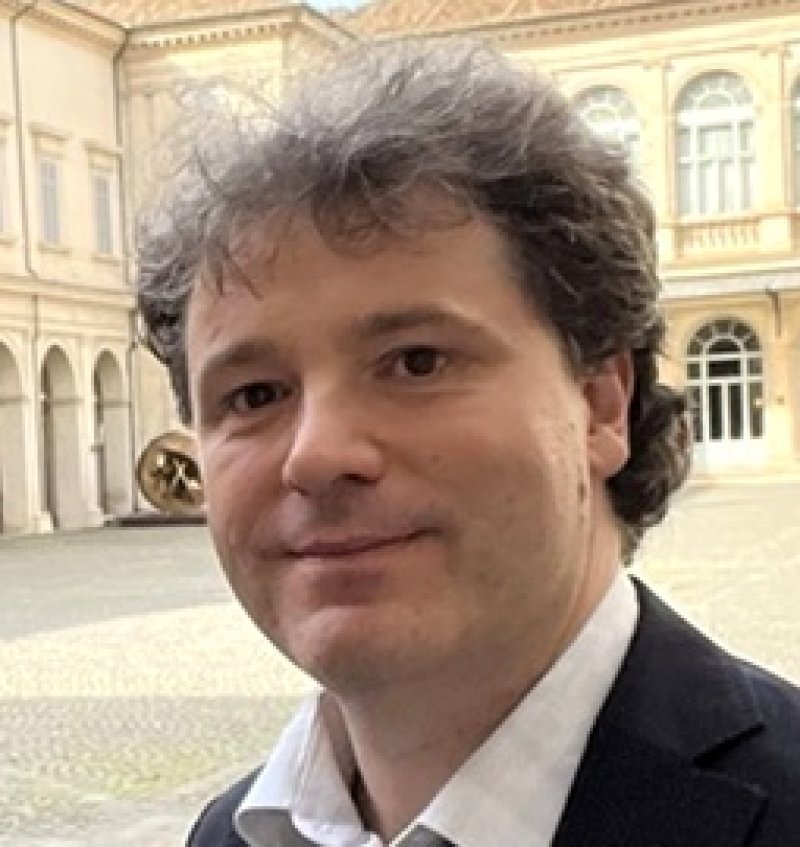
Federico Forneris
Coordinatore
Fondazione INF-ACT
Graduated in Physical Chemistry at the University of Turin in 2002, he got his PhD in 2007 in Basic and Applied Bio-Molecular Sciences (University of Pavia and IUSS), and continued as postdoc at the University of Pavia for one more year. Between 2009 and 2013 he worked as postdoc in structural biology in the Bijvoet Centre for Biomolecular Research, Utrecht University (The Netherlands), then he started his independent scientific research lab at the University of Pavia, Dept. Biology and Biotechnology, in 2014, thanks to the Giovanni Armenise-Harvard Foundation Career Development Award and the "Rita Levi-Montalcini" program for young researchers from MUR. Since August 2023, he is Full Professor of Molecular Biology at the University of Pavia. In 10 years since the start of his first appointment as Principal Investigator, he made important contributions to science testified by high-profile international publications, and secured funding for research through several competitive research grants from various national and international funding agencies. His research activity focuses on the characterization of extracellular macromolecular systems using biochemistry, biophysics and structural biology.
Since 2022 he serves as President of the INF-ACT Foundation.

Giovanna Marchese
WP2 Leader
Genomix4Life
Molecular biologist with a Bachelor's Degree awarded cum laude, she holds a Ph.D. in Molecular Medicine from the University of Siena and a Second-Level Master's Degree in Innovation and Research in Health Sciences (Genomics and Bioinformatics), awarded cum laude, from the University of Salerno. She is the co-founder of Genomix4Life S.r.l., where she serves as R&D Manager and Director of the NGS Laboratory, as well as a member of the Board of Directors. She is also a member of the Scientific Committee of the Center for Research in Genomics for Health (CRGS), contributing to the definition of scientific strategies and the development of translational research programs. She has more than ten years of experience in advanced genomics and next-generation sequencing (NGS) technologies, with expertise in project design and coordination, as well as technology transfer. She is highly experienced in the use of major sequencing platforms and their applications in genomics, transcriptomics, epigenomics, metagenomics, single-cell and spatial transcriptomics, together with the associated bioinformatics analyses. Author of more than 50 scientific publications in international peer-reviewed journals, she contributes to the development of innovative methodologies and high-value technological services for precision medicine, promoting the translation of cutting-edge genomic technologies from research into clinical practice

Alessandro Giuffrè
WP3 Leader
Consiglio Nazionale delle Ricerche
....

Assunta Borzacchiello
WP3 Co-Leader
Consiglio Nazionale delle Ricerche
Assunta Borzacchiello earned her M.S. degree in Chemical Engineering, cum laude, and her Ph.D. in Materials Technologies from the University of Naples Federico II. She was a Research Scientist at QMWC, University of London, in 1996 and at the University of Connecticut, USA, in 1997. She was Professor of Biomaterials at the University of Naples Federico II from 2002 to 2011 and Visiting Professor at McGill University, Canada (2018 and 2019). She is currently Research Director at IPCB-CNR. She has been PI and local PI for IPCB-CNR in numerous nationally and internationally funded projects, including the PNRR projects INF-ACT, funded by MUR, and PRESTO, funded by the Italian Ministry of Health. Her research focuses on the design and development of biomimetic, multifunctional and nanostructured materials for tissue engineering, regenerative medicine, drug delivery and nanomedicine. Particular attention is devoted to cell–material interactions and advanced in vitro models, including organoids and organ-on-chip systems. Her research also addresses pulmonary regeneration and antimicrobial materials, supported by expertise in microfluidics, rheology and microrheology.
She is the author of more than 120 peer-reviewed publications and has an h-index of 43 (Scopus)