ArbofEVer
Acute fever of arboviral aetiology: host-derived immune factors and circulating extracellular vesicles as novel early biomarkers
Budget: € 150,000
Acute febrile illness (AFI) represents an important medical issue in multiple settings due to the lack of early and rapid tools able to indicate the aetiological origin of the febrile episode; however, the prompt determination of AFI aetiology is paramount to prevent serious untoward effects at the patient and public health levels. As an important cause of AFI in Italy, autochthonous (e.g. West Nile) and imported (e.g. Dengue) arboviral infections are currently considered an emerging health concern.
The increasing spread of competent vectors, the prolongation of the summer season due to climate change and the increased travelling of people, are some of the factors contributing to the raised number of arboviral infections of clinical relevance registered during the last years. Unfortunately, patients are often misdiagnosed due to the non-specific clinical presentation and the lack of awareness among health practitioners.
Host biomarkers hold great promise as fever triage tests to be employed soon after admission to the emergency department or, if translated into appropriate tests, by general practitioners.
This project wants to combine classical and innovative approaches to identify a panel of biomarkers able to give early indications of arboviral infections in febrile patients and direct through a more specific testing for arboviruses. The mechanisms of host response to these infections will be thus investigated in depth, particularly through the evaluation of systemic inflammatory factors and the release of specific extracellular vesicles, which nowadays represent crucial players in the host-pathogen interaction and unique source of diseases biomarkers.
"The Armenise Harvard INF-ACT Mid-Career award represents an important support for my scientific career. Thanks to this funding, I will have the opportunity to expand my research group and employ innovative approaches such as the analysis of extracellular vesicles, which are nanoparticles released by human cells in response to various pathogens that may contain specific biological information about the ongoing infection."
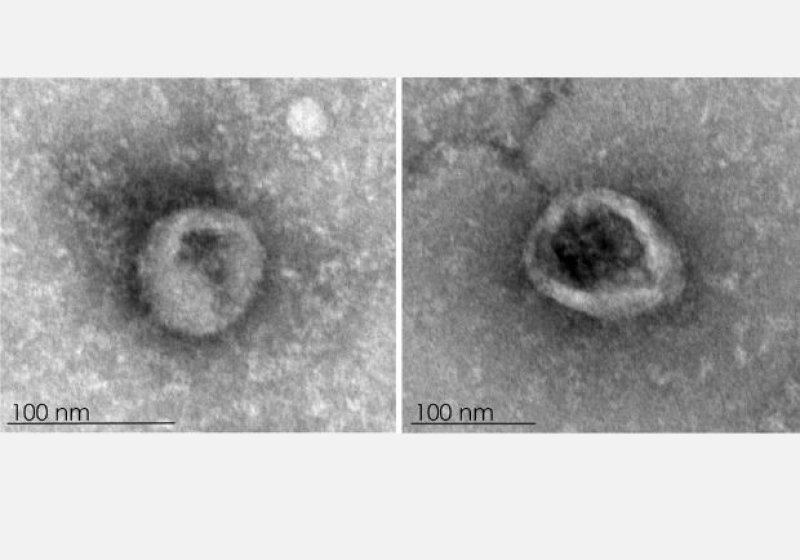
The figure shows extracellular vesicles enriched from human serum and visualised by transmission electron microscopy.
Institutions involved

Researchers involved
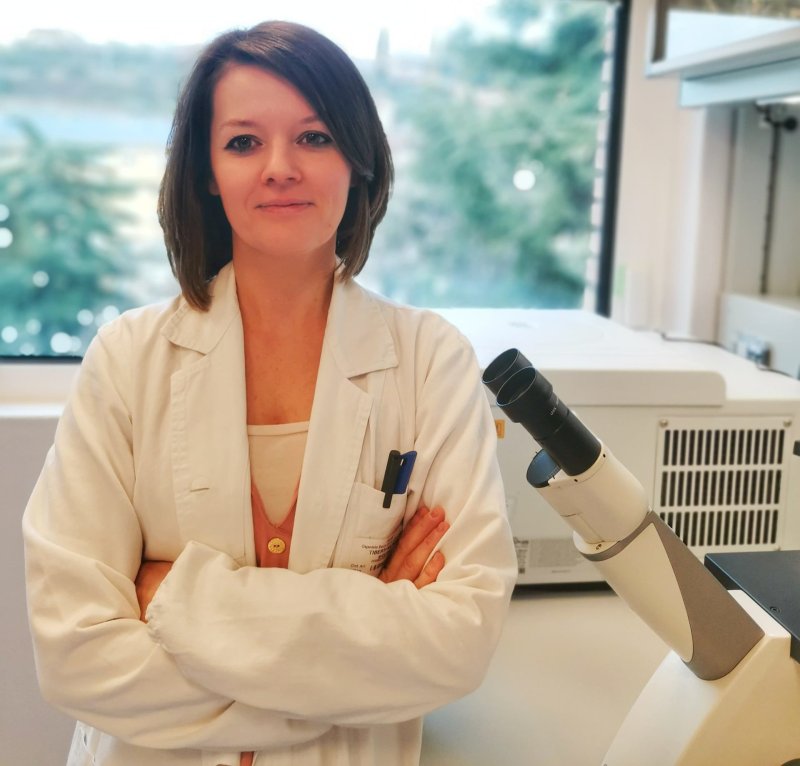
Natalia Tiberti
AH INF-ACT Mid Career Awardee
IRCCS Ospedale Sacro Cuore Don Calabria
Born in Parma, after completing a bachelor’s degree in Biotechnology and a master’s degree in Medical Biotechnology, she began her research journey in the field of infectious and tropical diseases by obtaining her Ph.D. from the University of Geneva (Switzerland) under the supervision of Prof. Jean-Charles Sanchez. She then honed her skills as a post-doc at the University of Sydney and the University of Technology Sydney (Australia) in the group led by Prof. Valery Combes.
Since 2018, she has been an independent researcher at the Department of Infectious, Tropical, and Microbial Diseases at the IRCCS Sacro Cuore Don Calabria Hospital (Negrar di Valpolicella, Verona), focusing on translational biomedical research with a particular interest in studying biomarkers for infectious and tropical diseases, as well as the mechanisms of interaction between the human host and different types of infectious agents.
News and events