28/02/2024
At 'Università di Bari, the 3rd Meeting on Vector Arthropods and Vector-Borne Diseases, Research Node No. 2 of the INF-ACT Project
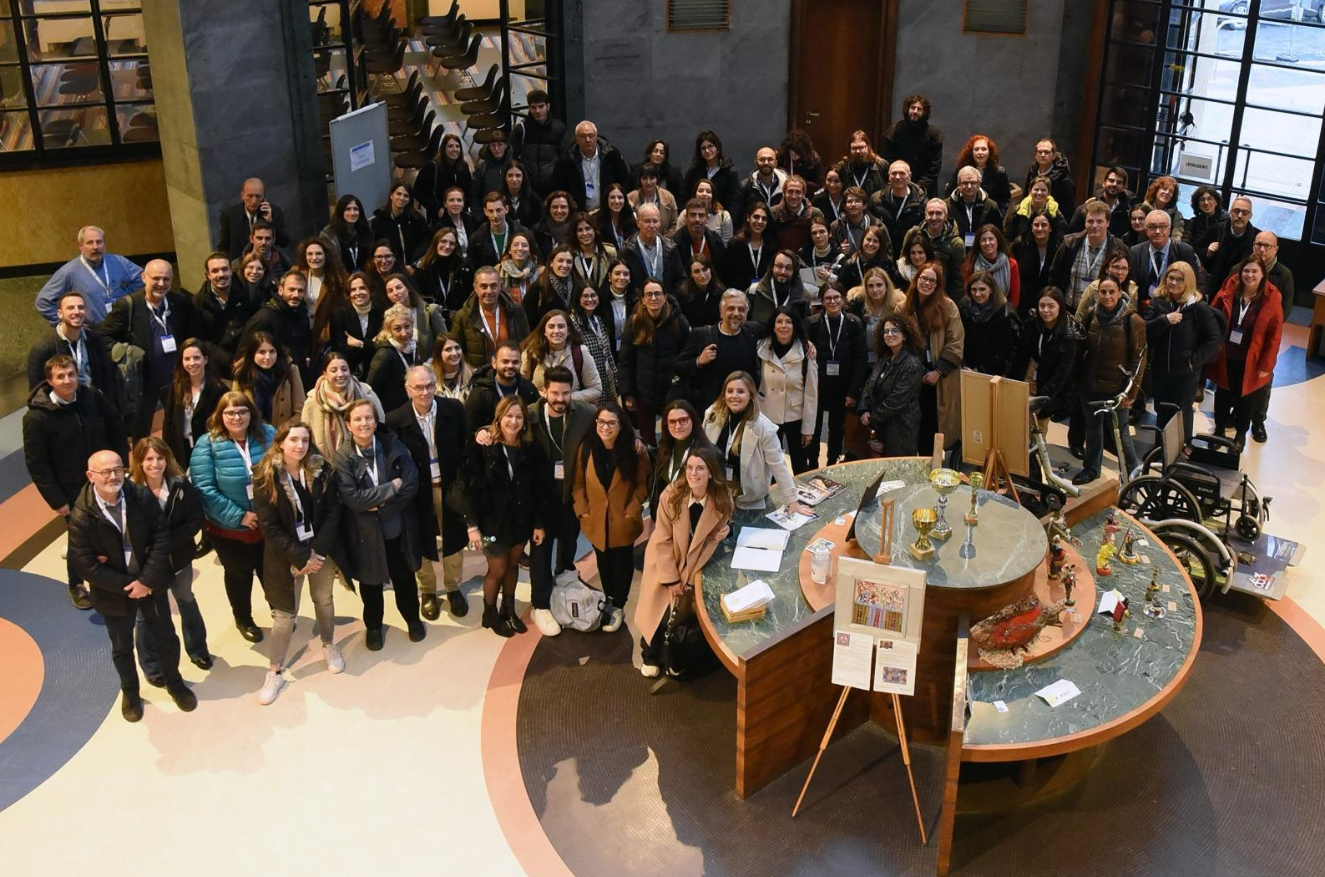
The national meeting of the PNRR INF-ACT project focused on vector arthropods and emerging vector-borne infectious diseases took place in the main auditorium (Aula Magna) of the University of Bari's Palazzo dell'Ateneo on the morning of February 29th, continuing at the former Post Office building (Palazzo Ex Poste) on the afternoon of February 29th and the morning of March 1st. Promoted by the INF-ACT consortium and organized locally by the University of Bari Aldo Moro and the Department of Veterinary Medicine of Bari as part of the project funded by the Ministry of University and Research through PNRR funds, the conference focused on updating ongoing activities and presenting the results achieved within "Research Node 2".
The extraordinary nature of the SARS-CoV-2 pandemic underscored the importance of animal-origin infectious diseases—viral, bacterial, and parasitic—transmissible to humans, which can have devastating effects even in countries at the forefront of technology, healthcare, and surveillance.
Thanks to the significant opportunity provided by European funds, Italy launched a scientific project stemming from strong synergies among Italian research institutions, including universities and the Ministry of Health. Its goal is to provide efficient responses to emerging epidemiological scenarios in the field of infectious diseases and predict their future course. The INF-ACT project was selected by the Ministry of University and Research and awarded €114.5 million under Mission 4, "Education and Research" - Component 2, "From Research to Business" of the National Recovery and Resilience Plan (PNRR) - Investment Line 1.3, "Extended Partnerships," funded by the European Union - NextGenerationEU.
The INF-ACT Foundation, which coordinates the project comprising 25 national universities, public bodies, and private entities, fosters cross-disciplinary collaboration to address potential epidemics using a "One Health" approach—an integrated, holistic framework where human health is intrinsically linked to animal and environmental health. This paradigm shift from a human-centric model to a global vision serves as the common thread across the research activities of INF-ACT's partners. Within this framework, arthropod-borne diseases (transmitted by mosquitoes, sandflies, and ticks) to humans and animals play an increasingly vital role.
This subject will be addressed at the University of Bari, where researchers from Italy and abroad will gather to discuss emerging infectious diseases caused by vector-borne pathogens. In today's context, urbanization, overpopulation, climate change, and the global movement of goods and people are accelerating the spread of infectious diseases that were once geographically localized.
The scientific networking event in Bari will be chaired by the project lead for UNIBA, Prof. Domenico Otranto, President of the World Federation of Parasitologists and professor in the Department of Veterinary Medicine. Rector Magnificus Stefano Bronzini will welcome the scientific experts. Additional addresses will be given by Professor Nicola Decaro, Director of the Department of Veterinary Medicine at the University of Bari; Professor Federico Forneris of the University of Pavia, President of the INF-ACT Foundation; and Prof. Alessandra della Torre of Sapienza University of Rome, National Coordinator of "Research Node 2." On the following day, Professor Antonio Felice Uricchio, former Rector of the University of Bari and current President of ANVUR, will also contribute.
"The University of Bari, through its Department of Veterinary Medicine, has long been committed to studying vector-borne diseases affecting animals and humans under the One Health concept," states Professor Domenico Otranto. "Our research is comprehensive, spanning diagnosis, control, and especially epidemiology, given the wide array of arthropod vectors present in our region and the potential introduction of new pathogens. All of this," Otranto continues, "aligns with our Department's One Health framework, which has seen numerous researchers actively engaged for years as part of the Department of Excellence project."
The initiative arises from the need to establish an active surveillance system for emerging diseases in Italy through:
-
In-depth study of emerging diseases and the identification of critical conditions (territorial connectivity, population density, sanitation status) and factors (environmental, anthropogenic, biological) underlying them;
-
Monitoring native and invasive "alien" species of arthropod vectors carrying pathogens capable of causing emerging infectious diseases in human and animal populations (a specific focus of Spoke 2, coordinated by Prof. Otranto);
-
Investigation of new pathogenetic hypotheses regarding the manifestations of emerging diseases, aiming for potential clinical applications and mitigation strategies;
-
Application of artificial intelligence systems and big data analytics to build predictive models and design targeted intervention and containment measures.
The Partnership’s activities will thus contribute to developing a supply chain running from frontier research to end products and services, addressing key cross-cutting aspects.
According to Professor Federico Forneris, Vice-Rector for Research of the University of Pavia and President of the INF-ACT Foundation, "The work being developed alongside the 25 Foundation partners across the national territory holds immense potential to become a vital resource for the future." He adds: "Regular meetings to discuss project developments, such as the one taking place in Bari at the end of February, represent an essential milestone for exchange and debate. They ensure effective project execution, monitor the progress of planned scientific activities, and allow us to collaboratively address daily challenges inherent to cutting-edge research. In Bari, we will meet with over 100 researchers working on vector insects and the pathogens they transmit. This is a topic of paramount importance for a country like ours, where climate change is accelerating the spread of vector-borne diseases, making it crucial to develop coordinated strategies to mitigate associated risks."
Professor Alessandra della Torre of Sapienza University of Rome, National Coordinator of "Research Node 2," emphasizes the importance of these meetings in fostering research collaborations: "One of the five research nodes structuring the INF-ACT project focuses on arthropods that transmit dangerous pathogens to humans, such as mosquito-borne Dengue and Chikungunya viruses, and tick-borne Encephalitis viruses. Over these days in Bari, leading experts who have networked for over a year through the INF-ACT project are gathering to share findings and plan for the coming months. The true added value of these meetings is transitioning from isolated research to a shared vision—one aimed not only at scientific advancement, but also at building common resources that will sustain this field of research long after the project concludes."
Image gallery