09/11/2026
AWARDED THE ARMENISE HARVARD INF-ACT MID CAREER AWARD 2026
Simona Lodato will investigate the effects of viruses on the brain by targeting its natural protective barriers.
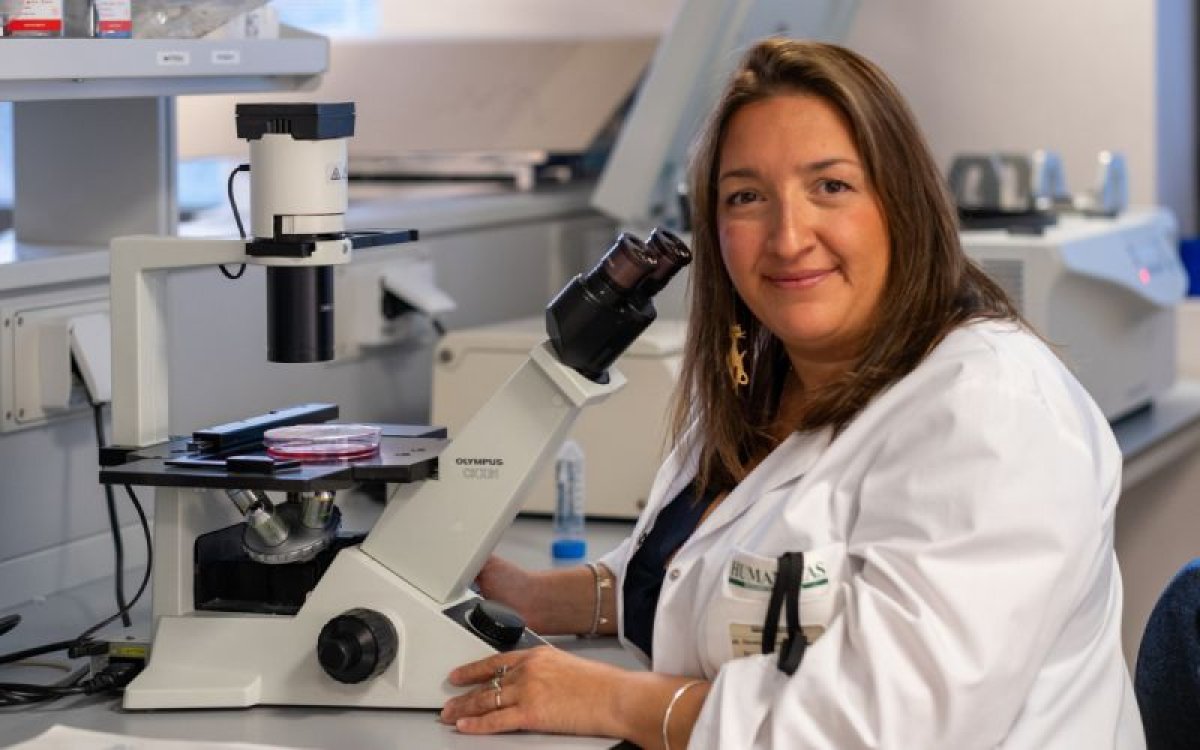
Simona Lodato, a developmental neuroscientist and stem cell biologist at IRCCS Istituto Clinico Humanitas, has been awarded the 2026 Armenise-Harvard INF-ACT Mid-Career Award, worth €150,000 and funded by the INF-ACT Foundation and the Giovanni Armenise-Harvard Foundation.
The winning project aims to develop experimental models to understand how viral infections disrupt brain function without directly infecting brain tissue, but instead by affecting the choroid plexus, the barrier that regulates the exchange between the blood and cerebrospinal fluid (CSF).
The choroid plexus: the new frontier of neuroscience
Located inside the brain, the choroid plexus and the study of its functions represent one of the emerging frontiers of neuroscience. Until just a few years ago, it had received relatively little attention. Today, however, it is emerging as a key structure for understanding the interplay between the brain, the immune system and viral infections, revealing a level of complexity and importance that was not previously appreciated.
Until just a few years ago, we knew very little about the complexity of the cerebrospinal fluid (CSF), in which the brain is suspended, and were unaware of the many specific functions of the choroid plexus, the tissue responsible for producing it and located within the brain's four ventricles. More recently, however, we have come to understand how choroid plexus cells are organised into an extraordinarily complex and delicate structure that simultaneously acts as both a protective barrier and a gateway to the brain. It is precisely this dual role that certain viruses, such as SARS-CoV-2, the virus responsible for COVID-19, Herpes Simplex Virus type 2 (HSV-2) and Zika virus, exploit to reach the central nervous system - explains Simona Lodato, Associate Professor at Humanitas University and Group Leader at IRCCS Istituto Clinico Humanitas.
The brain is protected by highly selective barriers that isolate it from the rest of the body. In some cases, however, certain viruses can cross these barriers, almost as if they possessed the right keys to unlock the gateways to the brain. The central hypothesis of the award-winning project is that, once they reach the choroid plexus, some viruses alter its function and, consequently, the composition of the cerebrospinal fluid it produces, which in turn bathes the entire nervous system. These inflammatory and metabolic changes — rather than direct viral infection of brain tissue — may be what disrupts neuronal circuit function, with serious consequences for health.
To investigate this hypothesis, Prof. Lodato's laboratory has developed a new experimental model: human vascular-immune choroid plexus organoids.
In my laboratory, also thanks to this funding, we will expose vascul-immune choroid plexus organoids to viruses and observe, stepy by step, how the viruses alter the choroid plexus. We will investigate the entire process. Our ultimate goal is to identify specific biomarkers of this process, enabling early intervention — before the damage becomes irreversible. In the longer term, these findings could pave the way for new diagnostic strategies - continues Professor Simona Lodato.
The project also benefits from the collaboration of Professor Valeria Cento, microbiologist and Associate Professor at Humanitas University, and Dr Davide Mileto, virologist at Ospedale Sacco in Milan. They will contribute their expertise to the study of the viruses of interest and to the characterisation of the experimental model, further strengthening the project's interdisciplinary approach.
A funding gap, not a lack of scientific excellence
The research project was selected through the rigorous evaluation procedures of the Giovanni Armenise-Harvard Foundation.
We are very pleased with the outcome, as we received numerous high-quality applications featuring innovative approaches to research. The award will make it possible to explore the potential of modern scientific research, in which human health is interconnected with animal and environmental health (One Health) - says Federico Forneris, President of the INF-ACT Foundation.
The limited availability of funding opportunities specifically dedicated to researchers at the mid-career stage often puts established careers at risk. This can jeopardise the ability to translate into tangible outcomes the investments made during the initial stages of setting up a laboratory and, above all, risks preventing scientific discoveries from reaching their full potential - says Elisabetta Vitali, Executive Director of the Giovanni Armenise-Harvard Foundation.
Image gallery