15/07/2026
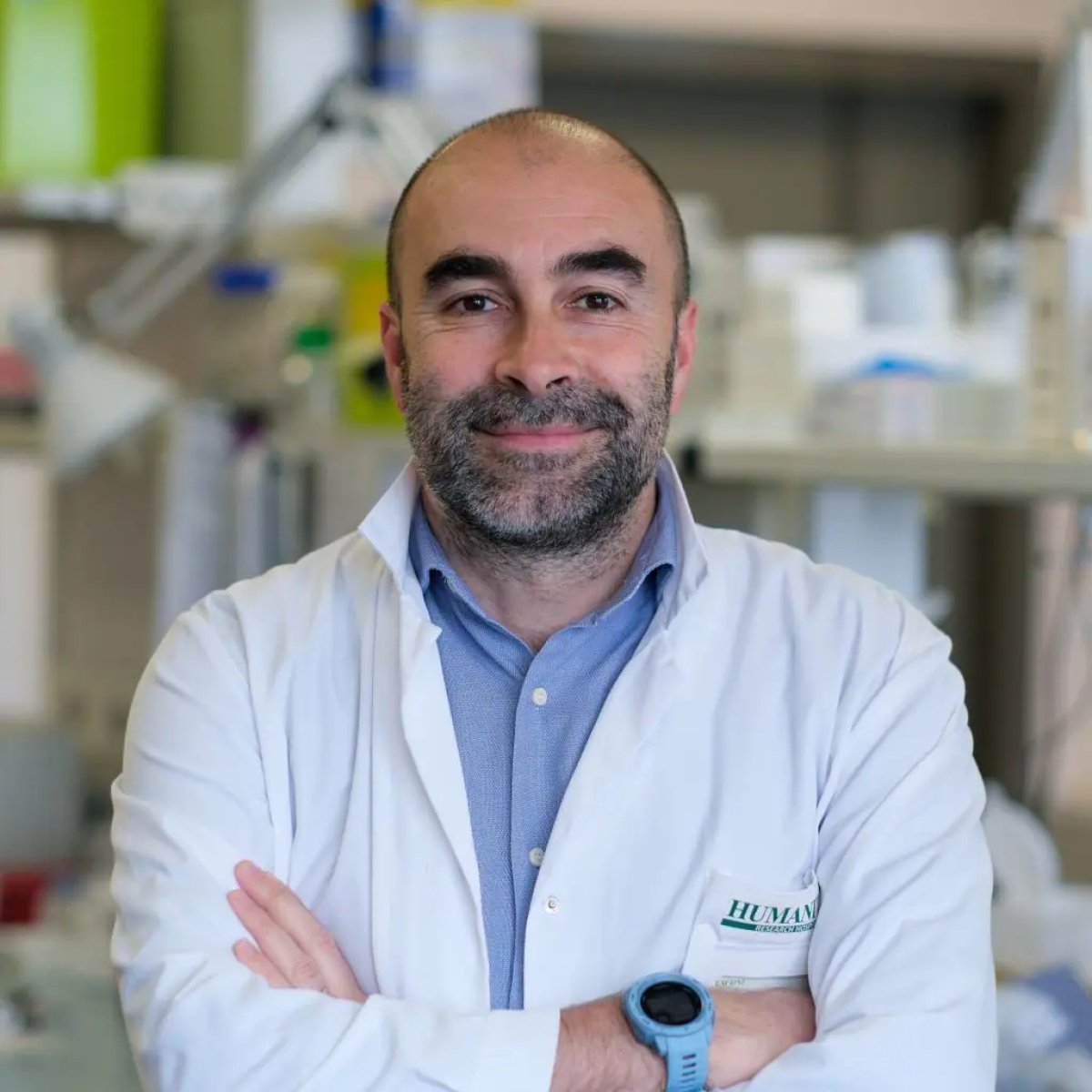
Interview to Prof. Roberto Rusconi - AH INF-ACT Mid Career Awardee
Roberto Rusconi was awarded the Mid Career Award 2024, funded by the INF-ACT Foundation in collaboration with the Armenise-Harvard Foundation. The award is intended for researchers who have been active for at least five years, but fewer than twelve years, and are affiliated with one of the 25 partners of the INF-ACT Consortium.
At his laboratory within the IRCCS Humanitas Clinical Institute, he studies bacterial biofilms to understand how they form and how they contribute to antibiotic resistance.
Tell us about the project that was funded by the Mid Career Award
The proposed project focuses on bacterial communities protected by an extracellular matrix produced by the bacteria themselves. Biofilms represent one of the greatest challenges in controlling persistent hospital-acquired infections and are particularly associated with the use of biomedical devices.
With the support of this fellowship, we have deepened our understanding of the mechanisms underlying biofilm formation and of the factors that make biofilms resistant to antibiotics. In particular, we decided to focus on the distinctive structures that biofilms develop under flow conditions, such as those found in catheters and stents, and to investigate the role of bacterial DNA released into the extracellular matrix.
Our research used Pseudomonas aeruginosa strains, including both previously sequenced strains and newly isolated ones. We also sequenced bacteria collected from patients admitted to the hospital with chronic infections.
What is the ultimate goal of the study?
By gaining a better understanding of how biofilms form and how they acquire resistance to antibiotics, we hope to identify new strategies to combat these resilient bacterial communities, potentially leading to innovative approaches for infection control.
Why are these biofilms such a significant problem?
Their danger lies in their ability to cause hidden infections that can emerge even many years later, thanks to the protection provided by the biofilm.
Compared with acute infections, these bacterial communities are much more difficult to treat. When prosthetic devices are involved, the situation becomes even more complex: the implant often has to be replaced, specialized cleaning procedures may be required, and every effort must be made to prevent the infection from spreading to the surrounding tissues.
What results have you achieved over the past twor years?
As I mentioned, we investigated biofilm development under dynamic conditions—that is, in the presence of flow, such as inside cannulas or catheters.
We observed that biofilms formed under flow are very different from those developing under static conditions. Instead of growing directly on a surface, the flowing environment promotes the formation of filamentous structures characterized by the release of extracellular DNA, which becomes integrated into the biofilm matrix.
The lysis of some bacterial cells releases extracellular DNA, which then serves as a structural scaffold supporting biofilm growth.
In the presence of flow, and also in environments containing meshes or membranes, this mechanism becomes the dominant mode of biofilm formation.
Moreover, we discovered that the same mechanism is triggered by exposure to low concentrations of antibiotics. The antibiotic damages and breaks bacterial cell membranes, increasing the release of extracellular DNA. Counterintuitively, therefore, the use of antibiotics can actually promote biofilm growth.
Do biofilms formed on static surfaces differ form those formed under dynamic condition only in shape, or also in chemical composition?
Both. For some bacterial species, the "suspended" biofilms that develop under dynamic conditions are dominated by extracellular DNA.
By contrast, biofilms formed under static conditions contain much lower levels of extracellular DNA relative to the polysaccharides produced by the bacteria. As a result, the most effective strategy for disrupting a biofilm may vary depending on the conditions under which it has formed.
This is a filedl where biology intersects with physics....
My experience in the United States confirmed how essential it is to build an interdisciplinary team to tackle this type of research.
My own background is in physics and engineering. I hold a degree in Nuclear Engineering and a PhD in Radiation Science and Technology from the Polytechnic University of Milan.
Thanks in part to this fellowship, our research group has expanded and now includes researchers with expertise in biomedicine, engineering, biotechnology, computer science, and biochemistry.
How close are these discoveries to being translated into clinical practice?
Working within an IRCCS has brought research and clinical practice much closer together, both through access to samples collected directly from patients and through the faster translation of research findings into practical solutions.
The development of entirely new therapies naturally requires more time. However, it is possible to implement changes more rapidly in clinical protocols that discourage biofilm formation, as well as to contribute to the selection of materials and surface properties for medical devices that are less prone to biofilm development.
Image gallery